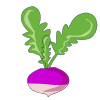
White turnips are the crisp, peppery underdogs of the root vegetable world. Often overshadowed by their colorful cousin the radish or the sweeter parsnip, the white turnip offers a clean, versatile flavor profile that transitions beautifully from raw salads to hearty stews.
Appearance and Texture Skin: Smooth, creamy-white skin. While some varieties feature a distinctive purple or rose-colored shoulder (where the root peeked above the soil), true "all-white" varieties like the Tokyo Cross are snowy from top to bottom.
Flesh: Inside, the flesh is crunchy and bright white, similar in texture to a firm apple or a crisp radish.
Size: They are best harvested when small—roughly the size of a golf ball or a tennis ball. Large turnips can become "pithy" or woody in texture.
Flavor Profile The flavor of a white turnip depends entirely on how you treat it:
Raw: They have a mild, peppery bite and a subtle sweetness. They are much less aggressive than a red radish.
Cooked: Once roasted, steamed, or sautéed, that peppery edge vanishes. They become buttery, mellow, and slightly earthy, acting as a fantastic sponge for sauces and seasonings.
Nutritional Snapshot White turnips are low in calories but high in fiber and essential nutrients. They are particularly known for:
Vitamin C: Great for immune support.
Potassium: Helps regulate blood pressure.
Glucosinolates: Natural sulfur-containing compounds that have been studied for their antioxidant properties
How To Grow
Growing white turnips is a win for any gardener because they are fast-growing, relatively hands-off, and thrive in those "shoulder" seasons when other vegetables struggle.
Here is how to get them from seed to plate:
- Timing: When to Plant Turnips are cool-weather lovers. If they get too hot, they become woody and unpleasantly spicy.
Spring Crop: Sow March to May (as soon as the soil is workable).
Autumn Crop: Sow July to August. This is often the best time, as the cooling soil of autumn produces the sweetest roots.
Winter Greens: Sow in September if you only want the leafy tops.
- Preparation: Soil & Sun Sun: They prefer full sun but can handle partial shade, especially in the heat of late summer.
Soil: They aren't picky, but they do best in loose, well-draining soil. Mix in some compost a week before planting, but avoid high-nitrogen fertilizers, which will give you huge leaves but tiny, stunted roots.
The "Clean Bed": Try not to plant them where you just grew cabbage or broccoli, as they share the same pests (like clubroot).
- Sowing and Spacing Depth: Sow seeds about 1cm (½ inch) deep.
Direct Sow: Turnips have sensitive taproots and don't like being moved, so sow them directly where they will grow rather than in trays.
Spacing: Sow in rows about 25-30cm apart.
Thinning: Once they are a few inches tall, thin them out so there is 10-15cm between each plant.
Note: Don't throw the thinnings away! Those tiny baby leaves and roots are delicious in a salad.
- Care: The "Wet Head" Rule An old gardening proverb says, "Turnips like a dry bed but a wet head."
Watering: This is the most important part. They need consistent moisture. If the soil dries out and then gets drenched, the roots will split. Keep them regularly watered to ensure a mild, crunchy flavor.
Weeding: Keep the area clear of weeds while the plants are young, but be careful not to nick the "shoulders" of the turnips with your hoe.
Pests: Watch out for Flea Beetles (tiny holes in leaves). Covering the crop with a fine mesh (horticultural fleece) right after sowing is the best way to keep them—and cabbage root flies—away.
- Harvesting For Greens: You can snip a few leaves once they are 10cm tall. Don't take all of them if you still want the root to grow.
For Roots: White turnips are fastest! Most varieties (like Tokyo Cross) are ready in just 5 to 8 weeks.
The Sweet Spot: Harvest when they are the size of a golf ball for the best flavor. If they get much larger than a tennis ball, they start to lose their sweetness and get "pithy."
Harvesting
Harvesting white turnips is all about timing. Unlike potatoes, which can hang out underground for a while, white turnips have a "goldilocks" window where they are perfectly sweet and crisp. If you wait too long, they turn into woody, bitter sponges.
Here is the step-by-step guide to a perfect harvest:
- Check the Size (The Visual Test) The best way to tell if they are ready is simply by looking at the "shoulders" of the vegetable poking out of the soil.
Baby Turnips: Harvest when they are about 2–3 cm (1 inch) in diameter. These are incredibly sweet and can be eaten raw like radishes.
Standard Harvest: Aim for 5–8 cm (2–3 inches), roughly the size of a golf ball or a small tennis ball. This is the sweet spot for flavor and texture.
The Danger Zone: If they get larger than 10 cm (4 inches), they often become "pithy" (dry and spongy) and the flavor becomes unpleasantly sharp.
- The Extraction Process White turnips are delicate, and their skin is thin. You want to avoid nicking or bruising them.
Loosen the Soil: If your soil is heavy or dry, use a hand fork or a garden fork to gently loosen the earth about 4 inches away from the root.
The Pull: Grasp the turnip firmly at the base of the leaves (where the greens meet the root) and pull straight up.
Shake and Brush: Gently shake off any loose dirt. Do not wash them until you are ready to use them, as moisture on the skin can lead to rot during storage.
- Immediate Post-Harvest Care This is the most important step for keeping them fresh:
Separate the Greens: As soon as you bring them inside, cut the leaves off, leaving about 1 cm of stems attached to the root.
Why? The leaves will continue to draw moisture and nutrients out of the root even after it’s out of the ground, causing the turnip to shrivel and go soft within a day or two.
A Quick Troubleshooting Tip If you pull one up and find it has tiny brown tunnels or scars on the skin, you likely have Cabbage Root Maggots. They are still safe to eat! Just peel away the damaged outer layer before cooking.