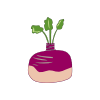
The swede (known in the U.S. as a rutabaga) is the rugged, unsung hero of the root vegetable world. Often confused with its cousin the turnip, the swede is actually a prehistoric hybrid between a cabbage and a turnip.
If a potato is the reliable best friend, the swede is the sturdy, slightly earthy relative who shows up to every winter dinner.
Appearance and Texture The Look: It’s a large, round tuber with a thick, matte skin. The top half is usually a dusty purple, while the bottom is a pale creamy yellow.
The Inside: When raw, the flesh is dense, hard, and pale orange or yellow.
The Texture: Once cooked, it transforms from rock-hard to velvety and tender—similar to a potato but with a bit more "bite."
Flavor Profile The swede offers a complex balance of flavors:
Sweetness: It has a higher sugar content than a turnip, which intensifies when roasted.
Earthy/Peppery: It carries a mild, mustard-like pepperiness inherited from its cabbage lineage.
Buttery: When mashed with plenty of butter and black pepper, it develops a rich, savory depth.
Popular Ways to Enjoy It The Scottish "Neeps": Traditionally mashed and served alongside haggis and "tatties" (potatoes).
The Cornish Pasty: A vital ingredient in a traditional pasty, providing moisture and a distinct sweetness to the meat and potato filling.
Roasted: Cubed and tossed in olive oil and rosemary, they caramelize beautifully in the oven.
Soups and Stews: Because they hold their shape better than potatoes during long cooking times, they are perfect for slow-cooked beef stews.
Pro Tip: Swede skins are notoriously tough and often coated in food-grade wax to keep them fresh. You’ll definitely want a sturdy peeler or a sharp chef's knife to prep these.
Nutritional Value Swedes are a nutritional powerhouse for the colder months. They are low in calories but high in Vitamin C, potassium, and fiber, making them a great lower-carb alternative to the standard potato
How To Grow
Growing swedes is a lesson in patience, but the payoff is a crop that stays fresh in the ground right through the frost. Since they are part of the Brassica (cabbage) family, they have specific needs to prevent disease and ensure a sweet, rather than woody, flavor.
- Timing and Location When to Sow: The sweet spot for sowing is late May to June. If you sow too early, the plants may "bolt" (go to seed) or get mildew; if too late, they won't reach a good size before winter.
Sun: They prefer full sun but can handle light shade.
Soil: They need fertile, well-drained soil. They are particularly sensitive to acidity, so if your soil is acidic, add garden lime to bring the pH to about 7.0.
- Sowing the Seeds Direct Sowing: Sow seeds directly into the ground in shallow drills 2cm deep.
Spacing: Space rows about 30–40cm apart. Once the seedlings are a few centimeters tall, thin them out so there is 20–25cm between each plant.
Note: If you don't thin them, you'll end up with lots of leaves and tiny, spindly roots.
Indoor Start: You can start them in modular trays in April to get a head start, but transplant them carefully to avoid disturbing the taproot.
- Care and Maintenance Watering: This is the most important step. Swedes must have consistent moisture. If the soil dries out and then gets a sudden deluge of water, the roots can split. Dry soil also leads to a woody, bitter texture.
Mulching: Add a layer of compost around the base of the plants to trap moisture and keep weeds down.
Feeding: Avoid high-nitrogen fertilizers, as these encourage leaf growth over root development. A balanced fertilizer like "Blood, Fish, and Bone" is usually sufficient.
- Troubleshooting Pests: Like all brassicas, they are loved by cabbage root flies and flea beetles. Covering the crop with a fine insect mesh or horticultural fleece from the day of sowing is the best defense.
Brown Heart: If your swedes have a hollow, brown center, it's likely a boron deficiency. A light sprinkling of household borax in the soil before planting can prevent this.
- Harvesting You can start harvesting from September, but swedes are famous for tasting better after the first few frosts, which converts their starches into sugars. They are incredibly hardy and can be left in the ground until you’re ready to eat them—just dig them up as needed through the winter
Harvesting
Harvesting swedes is a satisfying, low-stress task because these vegetables are built to withstand the cold. Unlike many other garden crops that rot if left too long, swedes actually improve with a bit of "tough love" from the weather.
- Timing the Harvest The Sweetness Factor: You can technically harvest swedes as soon as they reach the size of a tennis ball (usually from September onwards). However, most gardeners wait for the first frost. The cold triggers a chemical reaction in the root, converting starches into sugars, which results in a much sweeter, less "earthy" flavor.
Peak Size: They are best harvested when they are roughly the size of a grapefruit. If you leave them to grow into giant "trophy" vegetables, they often become woody, stringy, and lose their flavor.
- The Extraction Process Because swedes have a strong taproot and sit deep in the earth, they aren't always easy to pull by hand.
Loosen the Soil: Use a garden fork to gently pry the soil around the root. Insert the fork a few inches away from the vegetable to avoid piercing the skin (which leads to rot during storage).
The Lift: Once the soil is loose, grab the base of the leaves and lift the root out.
The Trim: Twist off the leafy tops about 2cm above the crown. Don't cut into the root itself, as this can cause it to bleed or rot.
- Cleaning and Storage Shake, Don't Scrub: Shake off any loose clumps of soil, but do not wash them if you plan on storing them. Moisture is the enemy of long-term storage and encourages mold.
Overwintering: In many climates, the best "storage" is simply leaving them in the ground. They are incredibly frost-hardy. If the ground is prone to freezing solid (making it impossible to dig them out), cover the row with a thick layer of straw or bracken to keep the soil workable.
Indoor Storage: If you must lift them all at once:
Store them in a cool, dark, and slightly damp place (like a cellar or a shed).
Place them in a box filled with damp sand or sawdust, ensuring the roots aren't touching each other. They can last up to 4 to 6 months this way.
- What to do with the Greens? Don't throw away the leaves! While they aren't as popular as the root, swede tops are edible. They taste similar to kale or spring greens. If they are young and tender, you can sauté them with a little garlic and butter