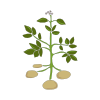
Runner beans (Phaseolus coccineus) are the overachievers of the vegetable garden. Unlike their more modest cousins, these beans are as much a feast for the eyes as they are for the plate, blending ornamental beauty with high-yield productivity.
The Look and Feel The Vines: These are vigorous climbers, often reaching heights of 2 to 3 meters (7 to 10 feet) in a single season. They require sturdy support—think bamboo tepees or trellis netting. +1
The Flowers: Most famous for their "Scarlet Runner" variety, they produce clusters of bright, fiery red blossoms. There are also white and bicolour (painted lady) varieties that are equally stunning. +1
The Foliage: They provide a dense, lush screen of heart-shaped green leaves, making them perfect for creating "living walls" or shaded garden nooks.
The Harvest The beans themselves are long, flat, and slightly textured (a bit "fuzzy" compared to smooth French beans).
Flavour Profile: They have a robust, "beany" flavour that is more pronounced than common green beans.
Texture: Best eaten when young and slender (about 15–20 cm). If left too long on the vine, they become "stringy" and tough.
The Seeds: If you miss the harvest window, don't worry. Inside are beautiful, large seeds—often mottled purple and black—which can be dried and used like kidney beans in stews.
Growing Conditions Runner beans are famously resilient but have a few specific preferences:
Sunlight: They crave full sun but appreciate a bit of shelter from harsh winds.
Water: They are thirsty plants. Consistent watering is the secret to a heavy crop and preventing the flowers from dropping off before they set fruit.
Pollination: Unlike many other beans, runner beans rely heavily on bees to pollinate their flowers. This makes them a fantastic choice for supporting local biodiversity.
Fun Fact: While most bean plants twine counter-clockwise, runner beans are "rebels" and twine clockwise around their supports
How To Grow
Growing runner beans is incredibly rewarding because they grow so fast you can almost see it happening. Since we're in late February, you're actually at the perfect time to start planning your "bean-stalk" empire.
Here is a step-by-step guide to getting a bumper crop.
- Timing and Starting Runner beans are frost-tender, so timing is everything.
Indoors (Late April/Early May): Start seeds in deep pots (root trainers or recycled toilet roll tubes work great) about 3–4 weeks before the last frost.
Outdoors (Late May/June): Sow directly into the ground once the soil has warmed up and the risk of frost has passed.
- Prepare the "Bean Trench" Runner beans are hungry and thirsty. If you want a massive harvest, do a little prep work:
Dig a hole or trench where they will grow and fill it with well-rotted manure or compost.
This acts like a sponge, holding onto the moisture the beans need during the hot summer months.
- Build a Support System You need to build your supports before you plant. These vines are heavy and vigorous.
The Tepee: Lash 3–4 bamboo canes together at the top. Great for small spaces.
The A-Frame: Two rows of canes angled toward each other and tied to a horizontal cross-pole. This makes the beans easier to pick.
Spacing: Plant one bean at the base of each cane, about 5 cm (2 inches) deep.
- Care and Maintenance Watering: This is the "golden rule." Water them deeply, especially once they start flowering. If the soil stays dry, the flowers will drop off without producing beans.
Mulching: Add a layer of bark or compost around the base to keep the roots cool.
Pinching Out: Once the vines reach the top of your canes, pinch off the growing tip. This encourages the plant to put its energy into side shoots and bean production rather than just getting taller
The Secret to a Long Harvest Pick them constantly. The more you harvest, the more the plant produces. If you let the beans get huge and the seeds mature inside, the plant thinks its job is done and will stop flowering. Aim to pick them when they are about the length of a pencil.
Harvesting
Harvesting runner beans is a bit of a "sweet spot" game. If you’re too early, they’re tiny; if you’re too late, you’re basically eating green cardboard.
Here is how to get the perfect harvest:
- The "Pencil" Rule The best time to pick runner beans is when the pods are between 15cm and 20cm (6–8 inches) long.
Texture: They should feel firm but snap easily.
The Seed Test: Look at the side of the bean. If you can see the bumps of the seeds bulging prominently through the pod, the bean is likely getting "stringy" and tough. You want the pod to look relatively flat.
- The Technique Don't just yank the beans off the vine! The stems are surprisingly brittle, and a rough tug can snap the main climbing vine or pull the whole plant off the trellis.
Use Scissors or Snips: Cut the short stalk (the pedicel) that attaches the bean to the vine.
Two-Handed Method: If you don't have shears, hold the vine with one hand and gently snap the bean upward with the other.
- The "Infinite Loop" Strategy This is the most important rule of runner bean physics: The more you pick, the more the plant grows.
Once the plant starts producing, check it every 2–3 days.
If you leave large, mature beans on the vine, the plant receives a hormonal signal that its "mission" (producing seeds for next year) is complete. It will stop flowering and die back.
Tip: Even if you can’t eat them all, pick the big ones and compost them just to keep the plant in "production mode."
- What to do with "Overgrown" Beans We all miss a few hidden behind the leaves. If you find a giant, leathery bean:
Don't eat the pod: It will be stringy and unpleasant.
Save the seeds: Shell the pink/purple seeds inside. You can cook them fresh (boil for 10–15 mins) like a lima bean, or dry them out completely to use in winter stews.
Storage Tips Fridge: Keep them in a perforated bag in the crisper drawer; they’ll stay crunchy for about 4–5 days.
Freezing: Runner beans freeze beautifully. Sliced them diagonally, blanch them in boiling water for 2 minutes, plunge into ice water, dry them, and bag them up