Rhubarb is the botanical world’s favourite paradox: technically a vegetable, legally a fruit (at least according to a 1947 NY court ruling), and famously sour enough to make your eyes water if eaten raw.
Often referred to as "pie plant," it is a cool-weather perennial that looks like a neon-pink version of celery. Here is a breakdown of what makes this plant so unique.
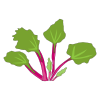
Appearance and Flavour The Stalks: Rhubarb is prized for its long, crisp stalks. They range in color from a pale, speckled green to a deep, ruby red. Contrary to popular belief, the redder stalks aren't necessarily sweeter—they just look prettier in a tart. +1
The Taste: On its own, rhubarb is intensely tart and astringent. It has a bright, "green" acidity that acts as a perfect foil for heavy sweets.
The Leaves (The "Danger" Zone): While the stalks are delicious, the leaves are toxic. They contain high concentrations of oxalic acid, so they are always trimmed off and discarded before the plant hits the kitchen.
Culinary Uses Because it is so incredibly tart, rhubarb is rarely the solo star of a dish without a massive supporting cast of sugar.
The Strawberry Connection: It is most famously paired with strawberries. The sweetness of the berry balances the sharp acidity of the rhubarb.
Classic Dishes: You’ll typically find it in crumbles, pies, galettes, and jams.
Savoury Twist: In some Middle Eastern and Nordic cuisines, it’s used as a souring agent for stews or paired with fatty meats like pork or duck to cut through the richness.
A Bit of Trivia: "Forced" Rhubarb In some parts of the UK (the "Rhubarb Triangle"), farmers grow rhubarb in complete darkness in heated sheds. Because the plant grows so fast in the dark, you can actually hear it snap, crackle, and pop as the stalks expand. This "forced" rhubarb is considered a delicacy because it’s more tender and sweeter than the garden-grown variety
How To Grow
Growing rhubarb is remarkably rewarding because it’s a "set it and forget it" perennial. Once established, a single plant can keep producing for 10 to 15 years. It’s a cold-weather champion that actually needs a winter chill to thrive.
Here is how to get your rhubarb patch started.
- Timing and Location When to Plant: Plant in early spring as soon as the soil can be worked, or in autumn after the plant goes dormant.
Sunlight: They love full sun but can handle partial shade (especially in warmer climates).
Soil: Rhubarb is a "heavy feeder." It needs deep, well-drained soil packed with organic matter (compost or rotted manure). It hates "wet feet," so avoid boggy spots where the roots might rot. +2
- Planting (Crowns vs. Seeds) Don't bother with seeds—they take forever and are genetically unpredictable. Buy crowns (dormant root pieces) from a garden center.
Dig a hole about 12 inches deep and wide.
Place the crown so the "eyes" (buds) are about 2 inches below the soil surface.
Space plants at least 3 feet apart. They get surprisingly huge!
- The "Patience" Rule This is the hardest part of growing rhubarb: Do not harvest any stalks in the first year. * Year 1: Let the plant grow freely. This allows the energy to go back into the roots to build a massive system.
Year 2: You can take a light harvest (just a few stalks).
Year 3+: Harvest to your heart's content!
- Maintenance and Care Mulching: Apply a thick layer of compost or straw every spring to keep moisture in and weeds out.
Watering: Keep it well-watered during the heat of summer. If the plant gets thirsty, the stalks will get "stringy."
Remove Seed Stalks: If you see a tall, thick, flowery stalk grow from the center, cut it off immediately. You want the plant’s energy going into the edible stalks, not producing seeds.
- How to Harvest Never use a knife to harvest rhubarb at the base; you might nick the crown and cause rot. Instead, use the "Pull and Twist" method:
Grasp the stalk near the bottom.
Pull firmly upward while giving it a slight twist. It should "pop" away from the base.
Immediately trim the leaves and put them in the compost
Harvesting
The "how" of harvesting rhubarb is just as important as the "when," because doing it incorrectly can actually damage the plant's crown and lead to disease.
Here is the professional way to harvest your stalks:
- The "Pull and Twist" Technique Forget the knife! Cutting the stalks leaves a "stump" that can rot and infect the main root (the crown). Instead, use the Twist and Pull method:
Grasp the stalk firmly near the base (at the soil level).
Apply a steady, firm upward pull while simultaneously twisting the stalk slightly to one side.
You should hear a satisfying "pop" as it detaches cleanly from the crown.
- The Golden Rule of Leaves Trim the leaves immediately. As soon as you pull the stalk, cut the leafy green part off and throw it in your compost or the bin.
Why? The leaves contain high levels of oxalic acid, which is toxic to humans and pets.
Bonus Tip: Trimming them right away also prevents the leaves from pulling moisture out of the stalk, keeping your harvest crisp for longer.
- How Much to Take? To keep the plant healthy for next year, you have to be a little bit "greedy" but mostly generous:
The 1/3 Rule: Never harvest more than one-third of the total stalks at one time. The plant needs the remaining leaves to photosynthesize and store energy for next year’s growth.
Thin Stalks: Leave any stalks that are thinner than a pencil; they aren't worth eating and are better left to help the plant grow.
Stop in Mid-Summer: Most gardeners stop harvesting by July. This gives the plant a few months of "rest" to prepare for winter.
- Signs It’s Ready Stalk Length: Most varieties are ready when the stalks are 10–15 inches long.
Thickness: Look for stalks that are about the thickness of a finger.
Colour doesn't matter: Don't wait for the stalks to turn entirely red. Some varieties stay green or speckled even when they are perfectly ripe.
Pro Storage Tip: Rhubarb wilts very fast once picked. Wrap the stalks (leaves removed!) in a damp paper towel, put them in a plastic bag, and they’ll stay crisp in the fridge for about a week