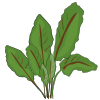
Red veined sorrel (Rumex sanguineus) is often called the "supermodel" of the herb garden. While most leafy greens are content just being green, this perennial herb brings high-contrast drama with its bright lime leaves and deep burgundy, lightning-bolt veins.
Here is a breakdown of what makes it unique, from its looks to its tangy flavour profile.
Appearance and Growth Red veined sorrel is primarily grown for its striking visual appeal. Unlike its plain cousin, common garden sorrel, this variety is as much an ornamental plant as it is an edible one.
The Leaves: Lance-shaped, bright green leaves marked by a dense network of dark red or purple veins.
The Habit: It grows in a neat, low-clump rosette. It’s relatively compact, making it a favourite for container gardening or as a "path-edger" in landscaping.
The Flowers: In midsummer, it sends up tall reddish-brown flower stalks. Most gardeners clip these off to keep the plant’s energy focused on producing those pretty leaves.
Flavour Profile If you’ve never tasted sorrel, the flavour usually catches people off guard. It’s not bitter like kale or peppery like arugula.
The "Lemon" Herb: Sorrel is famous for its sharp, citrusy tang. This comes from oxalic acid, which gives it a bright "zing" that mimics lemon zest or green apples.
Texture: Young leaves are tender and succulent; as they age, they become slightly tougher and the flavour becomes more intense
Quick Growing Facts Perennial: It comes back year after year in zones 4–8.
Sun: Prefers full sun but can handle partial shade (which can actually keep the leaves more tender).
Harvesting: Always pick the youngest leaves from the center for the best flavor and most vibrant color.
Note: Because it contains oxalic acid, it should be eaten in moderation, especially for those prone to kidney stones—much like spinach or rhubarb.
How To Grow
Growing red veined sorrel is surprisingly easy—it’s a hardy perennial that is often more resilient than the lettuce or spinach growing next to it. Since it's a "set it and forget it" type of plant, it’s perfect for both garden beds and pots.
Here is how to get it thriving.
- Getting Started: Seed or Start? From Seed: You can sow seeds directly into the garden about 2–3 weeks before the last frost. They germinate quickly (usually within 7–14 days).
From Division: If you know someone who already has a clump, you can easily "borrow" a piece. Sorrel is best divided in spring or autumn to keep the parent plant vigorous.
- Ideal Growing Conditions To keep those red veins vibrant and the leaves tender, aim for these settings:
Sunlight: It loves full sun, but if you live somewhere with scorching summers, partial shade is actually better. Too much heat can make the leaves tough and overly acidic.
Soil: It isn't picky, but it prefers well-drained soil with a slightly acidic pH.
Watering: Keep the soil consistently moist. If sorrel dries out, it will panic and "bolt" (go to seed), which makes the leaves taste woody.
- Planting and Spacing Depth: Plant seeds shallowly, about 1/4 inch deep.
Spacing: Space plants about 8–12 inches apart. They grow in clumps, so they need a little elbow room to breathe.
Containers: It’s a superstar in pots. Use a container at least 6–8 inches deep with good drainage holes.
- Maintenance and Care The secret to "infinite" sorrel is how you manage the plant as it grows:
Mulch: A layer of straw or wood chips helps retain moisture and keeps the roots cool.
Off with their Heads: Once the weather gets hot, the plant will try to send up a tall flower spike. Cut this off immediately. If you let it flower, the plant stops producing tasty leaves and puts all its energy into seeds.
Pest Control: Slugs and snails love the tart leaves as much as we do. Use organic slug bait or copper tape if you're growing in pots.
- Harvesting for Success Don't just haircut the whole plant. For the best flavour:
Pick the outer leaves first, or harvest the tiny "micro-greens" from the center.
Always leave at least one-third of the plant intact so it can recover.
Pro Tip: Frequent harvesting actually encourages the plant to grow more lush, colourful foliage.
The "Perennial" Perk Red veined sorrel is incredibly cold-hardy. In many climates, it will be the first green to pop up in late winter and the last one to die back in the fall. In mild winters, it may even stay evergreen
Harvesting
Harvesting red veined sorrel is all about timing. Because the plant is grown for both its looks and its sharp, lemony punch, the way you harvest depends on whether you want a delicate garnish or a bold salad ingredient.
Here is the best strategy to keep your plant productive and your plates looking professional.
- The "Golden Rule" of Timing The younger the leaf, the better the flavour.
Micro-greens (2–4 weeks): Harvest when the first "true leaves" appear. These are incredibly tender and have the most striking red veins.
Baby Leaves (4–6 weeks): These are roughly 2–3 inches long. This is the "sweet spot" for salads—they are crunchy, tart, and not yet fibrous.
Mature Leaves: Once they get larger than 4 inches, they become tough and the oxalic acid (the "zing") becomes very intense. Use these for soups or sauces where they will be chopped or blended.
- The Technique: "Cut and Come Again" Red veined sorrel grows in a rosette (a circular cluster). To ensure the plant keeps growing all season:
Pick from the outside: Always harvest the older, outer leaves first. This allows the tiny, new leaves in the center (the heart) to continue developing.
Use Scissors: While you can "pinch" the stems with your fingers, using clean garden snips or scissors prevents you from accidentally pulling the entire plant out of the loose soil.
Cut at the Base: Snip the stem as close to the crown (the base of the plant) as possible. Leaving long "stubs" can lead to rot or attract pests.
- Maintaining the Harvest Cycle To keep the leaves tasting their best throughout the summer:
The "One-Third" Rule: Never harvest more than one-third of the plant at a single time. The plant needs those remaining leaves to photosynthesize and recharge.
Flower Patrol: If you see a thick, tall stalk starting to grow from the center, cut it off immediately. Once the plant flowers (bolts), the leaves become bitter and the texture turns to sandpaper.
- Post-Harvest Handling Sorrel is notorious for wilting quickly—it’s much more delicate than kale or chard.
Cool it down: If you aren't using it immediately, dunk the leaves in a bowl of ice-cold water to crisp them up.
Dry thoroughly: Pat them dry with a paper towel or use a salad spinner.
Storage: Store in a sealed container or a reusable silicone bag in the crisper drawer. It will stay fresh for about 3 to 5 days.
Avoid Metal: When prepping, try to use a stainless steel knife. The acid in sorrel can react with carbon steel or aluminium, turning the leaves a metallic grey colour.