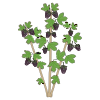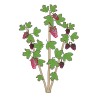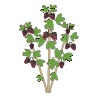
Autumn-fruiting raspberries—often called primocane raspberries—are the "low-maintenance overachievers" of the berry world. Unlike summer varieties that require complex pruning and two-year cycles, these plants simplify everything by producing fruit on the current season's growth.
Here is a breakdown of what makes them a garden favourite.
The Harvest Window While summer raspberries peak in June and July, autumn varieties take the stage from late August until the first hard frost (often as late as November). Because they fruit later in the year, they often dodge the peak season for common pests like raspberry beetles.
Growth and Appearance Stature: These plants tend to be slightly shorter and sturdier than summer-fruiting types, often needing less intensive cabling or support.
Fruit Quality: The berries are typically firm, deeply flavoured, and hold up well to late-summer rains.
Yield: They provide a steady "trickle" of fruit over several months rather than one overwhelming explosion.
Why Gardeners Love Them The real appeal of autumn-fruiting raspberries lies in their simplicity:
Foolproof Pruning: You don't need to guess which canes to cut. In late winter, you simply mow or shear the entire patch down to ground level. The plant starts fresh every spring.
Extended Season: If you plant both summer and autumn varieties, you can have fresh berries on your cereal for nearly five months of the year.
Versatility: They perform exceptionally well in large containers or raised beds, making them accessible even for smaller spaces
How To Grow
Growing autumn-fruiting (primocane) raspberries is remarkably straightforward. Since they do the hard work of growing and fruiting all in one season, your job is mostly about providing the right "real estate" and staying on top of the watering.
Here is how to get them established and thriving.
- Timing and Location When to Plant: The best time is during the dormant season (late autumn through early spring), provided the ground isn't frozen.
Sunlight: They need full sun (at least 6–8 hours) to develop those sugars. While they can grow in partial shade, your yield will be significantly lower and the fruit won't be as sweet.
Soil: They crave well-draining, slightly acidic soil. Raspberries have shallow roots and hate "wet feet," which can lead to root rot. If you have heavy clay, consider a raised bed.
- Planting Step-by-Step Prep the Ground: Clear all perennial weeds (they are a nightmare to pull once the raspberries are established). Mix in plenty of well-rotted manure or compost.
Spacing: Space individual canes about 45cm (18 inches) apart. If planting multiple rows, keep the rows 1.5m (5 feet) apart to allow for airflow and picking room.
Depth: Plant them at the same depth they were in the pot, or look for the "soil mark" on bare-root canes. Don't plant too deep—the crown should be just below the surface.
Initial Prune: Once planted, cut the cane down to about 25cm to encourage the roots to establish.
- Ongoing Care Watering: This is the big one. They need consistent moisture, especially when the fruit is swelling in late summer. Aim for the base of the plant to keep the leaves dry and prevent fungal issues.
Mulching: Apply a thick layer of bark chip, straw, or compost every spring. This suppresses weeds and keeps the shallow roots cool and moist.
Feeding: Sprinkle a general-purpose organic fertilizer (like blood, fish, and bone) around the base in early spring.
- Support Systems While autumn varieties are sturdier than summer ones, a full crop of berries can get heavy. A simple single-wire fence or a "T-post" system with twine running along the sides will keep the canes upright and the fruit off the dirt.
The "Magic" Pruning Rule The beauty of autumn raspberries is the Total Reset. Every year in February, take a pair of loppers or even a lawnmower (if the patch is large) and cut every single cane down to the ground. This clears the way for fresh, vigorous growth that will produce fruit by August
Harvesting
Harvesting autumn raspberries is the best part of the process, but there is a bit of an art to doing it without ending up with stained fingers and squashed fruit. Since these varieties fruit over a long period, you’ll be heading out to the patch quite often.
Here is the best way to handle your haul.
- The "Slip" Test The most important rule of raspberry harvesting is: Never pull. * The Technique: Gently grasp the berry between your thumb and forefinger. If it’s truly ripe, it will "slip" easily away from the central white core (the receptacle), leaving the core behind on the plant.
The Sign: If you have to tug, it’s not ready. Leave it for another 24–48 hours; the flavour improves massively in those final two days.
- Timing Your Harvest Frequency: During peak season (September), aim to harvest every 2 days. This prevents overripe fruit from rotting on the cane, which can attract fruit flies or mould that spreads to the healthy berries.
Weather: Try to harvest when the plants are dry. Picking wet berries is a recipe for instant mould (Grey Mould/Botrytis). If it’s been raining, wait for the sun to dry them off before you head out.
Time of Day: Early morning is ideal, after the dew has evaporated but before the heat of the midday sun softens the fruit.
- Proper Handling Raspberries are incredibly delicate. They don't have a "skin" like a blueberry to protect them.
Shallow Containers: Use a shallow basket or a punnet. If you pile too many raspberries on top of each other in a deep bucket, the weight of the top layer will crush the ones at the bottom into a jammy mess.
Don't Wash (Yet): Never wash raspberries until the exact moment you are ready to eat them. They act like little sponges; washing them earlier makes them soggy and speeds up decay.
- Storage Tips The Fridge: If you aren't eating them immediately, get them into the fridge as soon as possible. They will stay fresh for about 2–3 days.
The "Vinegar Bath" Trick: If you want them to last a bit longer, some gardeners swear by a quick dip in a mixture of 1 part white vinegar to 3 parts water, followed by a thorough drying. This kills mould spores on the surface