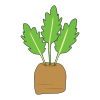
The radish is the unsung overachiever of the vegetable crisper. Often relegated to a garnish or a salad afterthought, this root vegetable from the Brassicaceae family (the same high-achieving clan as kale and broccoli) offers a lot more than just a pop of colour.
The Personality of a Radish If a radish had a personality, it would be "bold and snappy." Most varieties are famous for their crisp, crunchy texture and a peppery bite that can range from a mild zing to a sinus-clearing heat. That signature spiciness comes from isothiocyanates—the same compounds that give horseradish and mustard their kick.
A Spectrum of Varieties Radishes aren't just the little red globes you see in plastic bags. They come in a stunning array of shapes, sizes, and colours:
Red Globe: The classic supermarket staple—crunchy, mild, and reliable.
Daikon: A long, white winter radish common in Asian cuisine. It’s milder and juicier, perfect for pickling or simmering in stews.
Watermelon Radish: The "influencer" of the radish world. It looks like a plain greenish bulb on the outside, but slice it open to reveal a vibrant, fuchsia interior that looks exactly like a miniature watermelon.
Black Spanish: With a coal-coloured skin and a snowy white interior, these are notably spicy and earthy.
French Breakfast: Elongated with a gradient from red to white, these are milder and traditionally eaten with butter and salt.
Culinary Versatility While they are fantastic raw, radishes are surprisingly transformative when cooked:
Roasting: Tucks away the sharp "bite" and brings out a mellow, turnip-like sweetness.
Pickling: Quick-pickled radishes (often found on tacos or bahn mi) add a bright, acidic crunch.
Leaf-to-Root: Don't toss the tops! Radish greens are edible and taste similar to mustard greens; they make an excellent pesto or sauté.
Quick Facts Fast Growers: Radishes are a gardener’s favourite because some varieties can go from seed to harvest in as little as 25 days. They are the ultimate "instant gratification" crop.
Low Calorie: They are roughly 95% water, making them a hydrating, low-calorie snack.
Nutrient Dense: They provide a solid hit of Vitamin C, potassium, and antioxidants
How To Grow
Radishes are the "instant gratification" crop of the vegetable world. They are famously easy to grow, making them perfect for beginners, children, or anyone who wants a harvest in as little as 25 to 30 days.
Since it is currently late February, you are actually at the perfect time to start!
- Timing and Location When to plant: In the UK, you can start sowing outdoors in February or March if you use a cloche or fleece to warm the soil. Otherwise, April through August is the standard window.
Sunlight: They love full sun but can handle partial shade (which is actually better in the peak of summer to prevent them from getting too spicy or "bolting" into flowers).
Soil: They need loose, well-drained soil. If your soil is rocky or heavy clay, the roots will become stunted or misshapen.
- Sowing the Seeds Direct Sow: Radishes hate being moved, so sow them directly where they will grow (garden beds or pots).
Depth: Plant seeds about 1cm deep.
Spacing: Aim for about 2.5cm (1 inch) apart. If you’re doing rows, space the rows 15cm apart.
Succession Planting: Because they grow so fast, don't plant the whole packet at once! Sow a small batch every 10–14 days for a continuous supply all spring.
- Care and Maintenance Watering is Key: This is the most important rule. Keep the soil consistently moist. If the soil dries out and then gets drenched, the radishes will split. Lack of water also makes them taste incredibly (and sometimes unpleasantly) hot.
Thinning: If your seedlings are crowded, pull the smaller ones so the remaining plants have room to expand. You can eat the "thinnings" in a salad!
No Heavy Feeding: Radishes don't need much fertilizer. Too much nitrogen will give you beautiful lush leaves but tiny, pathetic roots.
- Harvesting and Storage Don't Wait: Harvest as soon as you see the "shoulder" of the radish popping out of the dirt (usually about the size of a large marble). If you leave them in the ground too long, they become "pithy" and woody.
Storage Trick: As soon as you pull them, cut off the green tops. If you leave the leaves on, they will suck the moisture out of the root, making it soft and shrivelled within a day
Harvesting
Harvesting radishes is all about speed and timing. Because they grow so fast, the window between "perfectly crisp" and "woody and inedible" is surprisingly short.
Here is how to ensure you get the best crunch for your efforts:
- Look for the "Shoulders" You don't have to guess what’s happening underground. As radishes mature, the top of the root (the "shoulder") will naturally push up above the soil line.
Spring Radishes: Harvest when the shoulder is about 2cm to 2.5cm (1 inch) in diameter—roughly the size of a large marble or a cherry.
Daikon/Winter Radishes: These are much larger and can be left until they are 5cm+ in diameter, depending on the specific variety.
- The "Touch Test" If you aren't sure, brush a little soil away from the base of the leaves with your finger.
If the root feels firm and round, it’s ready.
If it feels thin or "wiry," give it another 3–5 days.
- Pulling Technique Radishes have a single taproot, so they are very easy to pull.
Grasp the base of the leaves firmly where they meet the root.
Pull straight up. If the soil is particularly dry or hard, you can use a hand fork to gently loosen the earth next to the row first to avoid snapping the tops off.
- The Critical "Post-Harvest" Step This is the most common mistake beginners make: Once you’ve pulled them, cut the green tops off immediately.
If you leave the leaves attached, they will continue to draw moisture and nutrients out of the root to stay alive. This turns a crisp, crunchy radish into a soft, spongy one in a matter of hours.
Pro Tip: Don't throw the greens away! They are delicious sautéed in a little butter or whizzed into a spicy pesto.
Storage for Maximum Crunch Short term: Wash them, pat them dry, and pop them in a reusable bag in the fridge. They’ll stay crunchy for about a week.
The "Ice Bath" Trick: If you harvest a radish that feels a little soft, submerge it in a bowl of ice water for 30 minutes. It will often "re-inflate" and regain its snap.
What happens if you wait too long? If you leave them in the ground past their prime, they become "pithy." The inside becomes airy and spongy (like a dry apple), and the flavour turns aggressively hot. If the plant starts to grow a tall central stalk with flowers, it has "bolted"—at this point, the root is usually too woody to eat