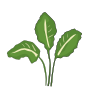
Despite what the name suggests, Perpetual Spinach isn't actually spinach—it’s a variety of chard (Beta vulgaris) bred to mimic the flavour and texture of true spinach without the finicky attitude.
If you’ve ever had your spinach bolt (go to seed) the moment the sun comes out, this is the plant you’ve been looking for.
Why It’s a Garden Favourite Perpetual spinach is the "low-maintenance cousin" of the leafy green world. Here’s why gardeners swear by it:
Heat Tolerance: Unlike true spinach, which wilts and seeds at the first hint of summer, this variety keeps producing leaves through high temperatures.
The "Cut-and-Come-Again" King: You can harvest the outer leaves indefinitely, and the plant will keep pushing new growth from the centre.
Texture & Flavour: It lacks the thick, earthy ribs of traditional Swiss Chard. Instead, it has thinner stems and smoother, more succulent green leaves that taste remarkably like spinach but with a slightly sweeter finish.
Cold Hardy: It’s a biennial. If you live in a temperate climate, it can often survive the winter, giving you an ultra-early harvest the following spring
How To Grow
Growing Perpetual Spinach is remarkably easy, even if you don't consider yourself a "green thumb." Since it’s technically a member of the beet and chard family, it is far more resilient than traditional spinach.
Here is how to get a thriving patch started.
- Timing and Location Perpetual spinach is a "goldilocks" plant—it handles both frost and heat well, making it one of the most flexible crops in the garden.
When to Plant: Sow seeds directly outdoors as soon as the soil can be worked in spring, or in late summer for a fall/winter harvest.
Sunlight: It thrives in full sun but is one of the few vegetables that will actually produce well in partial shade (especially useful in the height of summer).
Soil: It prefers rich, well-draining soil with a bit of compost mixed in.
- Sowing and Spacing Each "seed" you see is actually a small cluster of seeds (a fruit), so don't be surprised if multiple sprouts appear from one spot.
Depth: Plant seeds about 2cm (¾ inch) deep.
Spacing: Space rows about 30–40cm apart.
Thinning: Once the seedlings are a few inches tall, thin them out so there is about 20–25cm between plants.
Note: Don't throw the thinnings away! They are delicious in a salad.
- Care and Maintenance This plant is the "set it and forget it" of the leafy green world, but a little care goes a long way.
Watering: Keep the soil consistently moist. If the soil dries out completely, the leaves can become tough and bitter.
Mulching: A layer of straw or compost around the base helps retain moisture and keeps the leaves clean from soil splash-back.
Feeding: If your soil is poor, a high-nitrogen liquid feed every few weeks will encourage the lush, leafy growth you're looking for.
- Harvesting (The "Perpetual" Part) The secret to keeping this plant productive is frequent harvesting.
Start Early: You can begin picking baby leaves when the plant has about 6–8 sturdy leaves.
The Technique: Always harvest the outer leaves first. Cut them near the base with a sharp knife or garden snips, leaving the small "heart" in the center to continue growing.
Keep it Going: The more you pick, the more it grows. If the plant tries to send up a tall flower stalk (bolting), cut it off immediately to redirect energy back into leaf production.
Troubleshooting Tip Watch out for Leaf Miners: If you see "blisters" or wavy beige trails inside the leaves, it’s likely leaf miner larvae. Simply pinch off the affected leaves and dispose of them to stop the cycle
Harvesting
Harvesting Perpetual Spinach is where the "perpetual" part of the name really earns its keep. Unlike a head of lettuce that you harvest once and it's gone, this plant is designed to be picked continuously for months.
Here is the best strategy to keep your plants productive and your kitchen stocked.
- When to Start You can start harvesting as soon as the plant is established and has at least 6 to 8 sturdy leaves.
Baby Leaves: Harvest when leaves are about 5–10cm long for tender salads.
Mature Leaves: Harvest when they reach 15–20cm for sautéing or steaming.
- The "Outside-In" Technique To keep the plant growing indefinitely, you must respect its growth point (the "heart").
Target the Outer Leaves: Always pick the oldest, largest leaves from the outside of the cluster.
Leave the Centre: Never cut the small, upright leaves in the very centre of the plant. This is the "engine" that produces new growth.
Snip or Snap: Use clean garden snips or a sharp knife to cut the stem about 2cm (1 inch) above the soil. Alternatively, you can firmly "snap" the stem downward away from the plant.
- Frequency is Key The golden rule of Perpetual Spinach is: The more you harvest, the more it grows.
If you leave the large leaves on the plant for too long, they can become tough and slightly bitter.
Regular picking prevents the plant from "feeling" finished, which delays it from trying to produce seeds (bolting).
- Handling the "Bolting" Phase Eventually—usually in its second year or during a severe heatwave—the plant will try to send up a tall, thick flower spike from the centre.
To Extend Harvest: Cut the flower spike off as soon as you see it. This forces the plant to put its energy back into leaves for a few more weeks.
When to Stop: Once the leaves become noticeably narrow, tough, and bitter, the plant has reached the end of its life cycle