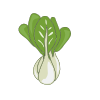
Pak choi (also commonly known as bok choy) is a staple leafy green in East Asian cuisine that has gained global popularity for its mild flavour and unique, dual-textured structure. It is a member of the cruciferous family ($Brassica\ rapa\ subsp.\ chinensis$), making it a close relative of cabbage, broccoli, and kale.
Physical Characteristics Unlike traditional European cabbages, pak choi does not form a compact "head." Instead, it grows in an upright rosette with: Stalks: Thick, crunchy, and bulbous at the base. Depending on the variety, these are either milky white (Canton style) or pale jade green (Shanghai style). Leaves: Deep green, smooth, and oval-shaped. They are tender and fan out from the top of the stalks.+1Size: Ranges from "Baby Pak Choi" (3–6 inches), which is harvested early for its tenderness, to mature plants that can reach up to 15 inches.
Flavour and Texture Pak choi is prized for providing two distinct culinary experiences in one plant: The Taste: It is significantly milder than most cabbages, with a sweet, slightly peppery undertone that some compare to a cross between spinach and water chestnuts. The Texture: The stalks remain crisp and juicy even after light cooking, while the leaves wilt quickly into a soft, silky texture similar to spinach.
Common Culinary Uses Because the stalks take longer to cook than the leaves, many chefs separate them or add the stalks to the pan a few minutes earlier. Stir-frying: The most popular method, often paired with garlic, ginger, and soy sauce. Soups: Frequently found in ramen, pho, or wonton soup, added at the very end to retain its crunch. Steaming/Grilling: Whole baby pak choi can be halved and grilled or steamed to serve as a clean, elegant side dish. Raw: Young, tender leaves are excellent in salads or as a crunchy slaw.
Nutritional Profile Pak choi is a "nutrient-dense" food, meaning it is very low in calories (about 13 calories per 100g) but exceptionally high in vitamins: Vitamin K: Essential for bone health and blood clotting. Vitamin C: A powerful antioxidant for immune support. Vitamin A: High levels of beta-carotene for eye health. Minerals: It is a surprising plant-based source of calcium, as well as potassium and folate.
Pak Choi vs. Bok Choy: Is there a difference? In short: No. They are the same vegetable. "Pak Choi" is the term more commonly used in the UK, Europe, and the Caribbean. "Bok Choy" is the standard term in the United States, Canada, and Australia. "Shanghai Bok Choy" specifically refers to the variety with green stems, whereas regular bok choy usually features white stems
How To Grow
Growing pak choi is incredibly rewarding because it is one of the fastest vegetables to go from seed to plate. In the UK, it thrives in our cool, damp climate, though its speed can be a double-edged sword: it is prone to "bolting" (flowering and going to seed) if it gets too stressed by heat or lack of water.
- Timing and Location Pak choi is a cool-season crop. In the UK, your best windows for success are:
Spring Sowing: April to May (harvesting before the mid-summer heat).
Late Summer Sowing (Best): July to August. This is often more successful as the decreasing day length and cooler nights prevent the plant from bolting.
Position: Full sun is great for spring/autumn, but if you are growing in June or July, choose a spot with partial shade to keep the roots cool.
- Sowing the Seeds You can sow pak choi directly into the ground or in modular trays.
Direct Sowing: Draw a shallow line (drill) about 1cm deep. Space rows 30cm apart. Once the seedlings are a few centimetres tall, thin them to 15–20cm apart (or 10cm if you only want baby leaves).
In Containers: Pak choi has shallow roots, making it perfect for pots. Use a container at least 20cm deep and keep it well-watered.
Germination: Seeds usually sprout quickly, often within 5 to 7 days.
- Care and Maintenance The secret to "crunchy" pak choi is consistent moisture.
Watering: Never let the soil dry out completely. If the plant feels a "drought stress," it will immediately try to produce seeds, making the stalks woody and bitter.
Mulching: Adding a layer of compost or bark around the base helps retain moisture and keeps the roots cool.
Protection: Like all brassicas (cabbage family), pak choi is a magnet for slugs and flea beetles (which leave tiny pinpricks in the leaves). Covering your crop with a fine insect mesh or horticultural fleece from day one is the most effective "set and forget" defence.
Harvesting
Harvesting pak choi is all about timing and technique. Because it grows so quickly, you have a "harvest window" of about two weeks before the plant starts to stretch and flower.
Here is the best way to handle your harvest to get the most out of your crop:
- Choose Your Harvest Style You don’t have to harvest the whole plant at once. Depending on what you’re cooking, you have three main options:
The "Cut and Come Again" Method (Best for Salads): When the plant is about 10cm tall, snip off only the outermost leaves using clean scissors. Leave the central "heart" intact, and the plant will continue to produce new leaves for several weeks.
The "Baby" Harvest (Best for Steaming): If you want those tender, whole baby pak choi often seen in restaurants, harvest the entire plant when it is roughly 12–15cm tall (usually 30–35 days after sowing).
The Mature Harvest (Best for Stir-frys): Wait until the base of the stalks looks thick, white (or pale green), and bulbous. This is usually around 45–50 days. The plant should feel firm when you give the base a gentle squeeze.
- The Proper Technique To keep your harvest clean and prevent damage to the remaining crop:
Use a Sharp Knife: Don't pull the plant out by the roots unless you are clearing the bed. Pulling can disturb the roots of neighbouring plants. +1
The "Ground Level" Cut: Hold the leaves together with one hand and use a sharp knife to slice through the main stem about 2cm above the soil line.
The Bonus Harvest: If you leave the "stump" in the ground after cutting a mature head, it will often sprout a second, smaller "mini-flush" of tiny leaves that are delicious in salads!
- Post-Harvest Care Pak choi has a high water content, so it wilts quickly once cut.
Cool Down: If you harvest on a sunny day, get the greens into the shade immediately.
Wash Thoroughly: Soil and small insects (like aphids or slugs) love to hide in the deep "U" shape of the stalks. Dunk the whole head in a bowl of cold water and swish it around to dislodge any hitchhikers.
Storage: Shake off excess water, wrap the pak choi in a damp paper towel, and place it in a perforated plastic bag in the fridge. It will stay crisp for about 4–6 days.
- Signs You Waited Too Long If you see a thick, tall stalk shooting up from the centre with small yellow flower buds, the plant is bolting.
Don't throw it away! Harvest it immediately. The yellow flowers are edible and make a beautiful garnish, though the main stalks might be slightly tougher than usual.
Common Problems
Common Problems with Pak Choi
Flea Beetle
Flea beetles are among the most damaging pests for pak choi. These tiny, jumping beetles chew small holes in the leaves, leaving them riddled with pinprick-sized damage. Young seedlings are especially vulnerable and can be decimated quickly. Prevention is far more effective than cure: cover plants with fine insect mesh immediately after sowing or transplanting. Yellow sticky traps can help monitor populations. Keeping the soil moist and plants growing vigorously reduces the impact of attacks.
Slugs and Snails
Slugs and snails are attracted to the lush, tender leaves of pak choi, particularly in cool, damp conditions. They typically feed at night, leaving irregular holes in leaves and a tell-tale silvery slime trail. Barriers such as copper tape around containers, slug traps baited with beer, or biological nematode controls applied to moist soil are all effective management strategies.
Bolting (Premature Flowering)
Bolting is the most common cultural problem with pak choi. When the plant experiences stress — from heat, drought, root disturbance, or long daylight hours — it switches from leafy growth to flower production. The central stem elongates rapidly, the leaves become sparse, and the stalks turn tough and bitter. To prevent bolting: sow in cool seasons, water consistently, use shade cloth in summer, and avoid root disturbance when transplanting. If bolting occurs, harvest immediately; the yellow flowers are edible.
Cabbage White Butterfly Caterpillars
The caterpillars of large and small white butterflies (cabbage whites) feed voraciously on brassica foliage, including pak choi. Damage appears as large, ragged holes in leaves, and frass (droppings) may be visible on the leaves. Check the undersides of leaves for clusters of yellow eggs and remove them by hand. Covering plants with insect-proof mesh is the most reliable long-term solution.
Aphids
Both the peach-potato aphid and the cabbage aphid can colonise pak choi, clustering on the undersides of leaves and in the base of the plant where stalks meet. Heavy infestations cause distorted, yellowing leaves and can transmit viruses. Encourage natural predators such as ladybirds (ladybugs) and lacewings. A strong jet of water can dislodge colonies; insecticidal soap spray is effective for heavier infestations.
Downy Mildew
Downy mildew (Peronospora parasitica) appears as pale yellow patches on the upper leaf surface with a grey-white fungal growth on the underside. It thrives in cool, humid conditions with poor air circulation. Improve spacing between plants, avoid overhead watering in the evening, and remove affected leaves promptly. Crop rotation helps prevent spores building up in the soil.