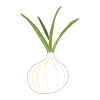
Red onions are the flamboyant cousins of the onion family. While yellow onions are the reliable workhorses of the kitchen, red onions are the bold, colourful stylists that bring both visual flair and a sharp, peppery bite to the table.
The Appearance Easily identified by their deep purple to reddish-magenta skin, red onions reveal a beautiful contrast once sliced. Inside, they feature crisp, white flesh circled by vibrant rings of purplish-red. Because of this striking pattern, they are the go-to choice for adding "eye appeal" to a dish.
Flavour Profile Red onions are known for being sharper and more pungent than yellow onions when raw, but they often have a higher sugar content.
Raw: They provide a spicy, crisp crunch with a lingering "bite."
Cooked: When grilled or roasted, they mellow out significantly, becoming jammy, sweet, and slightly charred.
Pickled: This is their "superpower." When soaked in vinegar, they turn a bright neon pink and develop a tangy, addictive crunch
How To Grow
Growing red onions is a lesson in patience, but the reward—bulbs that are far more flavourful than the grocery store variety—is well worth the wait. They are relatively hardy and can be grown in the ground, in raised beds, or even in deep containers.
- Timing and Prep Onions are photoperiodic, meaning they react to the amount of daylight. Depending on where you live, you’ll want to choose a variety labelled "Short-Day" (South), "Intermediate-Day" (Mid-latitudes), or "Long-Day" (North).
When to plant: Generally, plant in early spring as soon as the soil can be worked. In warmer climates, they can be planted in the fall to over-winter.
Soil: They love loose, well-draining soil rich in organic matter. Onions are heavy feeders, so mix in some compost or a balanced fertilizer before planting.
- Planting Options You have three main ways to start your red onion journey:
Sets (Small Bulbs): The easiest method. They establish quickly and are less prone to frost damage.
Transplants (Starts): Seedlings started by a nursery. These often result in the largest, healthiest bulbs.
Seeds: The cheapest route, but requires starting indoors 8–10 weeks before the last frost.
The Golden Rule: Plant sets or transplants about 1 inch deep and 4 inches apart. If you want to harvest some early as "green onions," you can plant them closer and thin them out later.
- Care and Maintenance Onions have shallow roots, so they don't like to compete for resources.
Watering: Keep the soil consistently moist. They need about 1 inch of water per week. If the soil gets too dry, the bulbs may split or stop growing.
Weeding: This is crucial. Since onion "leaves" are thin, they don't shade out weeds. Hand-weed carefully to avoid damaging the shallow onion roots.
Mulching: A light layer of straw can help retain moisture and keep weeds down.
- Harvest and Curing You’ll know they are ready when the tops turn yellow and fall over naturally.
The Drop: Once about half the tops have fallen, stop watering and let them sit for a few days.
The Pull: Gently lift the bulbs from the ground.
The Cure: If the weather is dry, let them sit on the soil surface for 1–2 days to dry. Then, move them to a shaded, breezy area (like a porch or garage) for 2–3 weeks until the outer skins are papery and the necks are completely dry.
Troubleshooting Tip If you see a flower stalk emerge (bolting), harvest and eat that onion immediately! Once an onion bolts, the bulb stops growing and it won't store well
Harvesting
Harvesting red onions is all about watching the "signals" the plant sends you. Unlike a tomato that turns red, an onion tells you it's done by essentially "quitting" and laying down for a nap.
Here is your step-by-step guide to a successful harvest and the all-important curing process.
- Identify the "The Flop" You shouldn't pull onions just because they look big enough; you have to wait for the plant to stop growing.
The Signal: The green necks will weaken, and the tops will naturally fall over and turn yellow.
The 50% Rule: Once about 50% to 75% of your onion tops have flopped over, it’s time to start the harvest process.
Stop Watering: As soon as you see the tops begin to fall, stop watering entirely. This allows the outer skins to begin drying and prevents the bulbs from rotting or trying to grow new roots.
- The Extraction Be gentle! Even though they look tough, red onions can bruise, and a bruised onion won't store well.
Loosen the Soil: Use a garden fork or trowel to gently pry the soil upward about 2–3 inches away from the bulb.
The Lift: Pull them up by the base of the leaves (the neck).
Shake, Don't Scrub: Gently shake off excess dirt. Do not bang them against each other or wash them with water. Moisture is the enemy of a shelf-stable onion.
- The Curing Process (The Secret to Longevity) If you eat a red onion straight from the ground, it will be delicious but very "hot" and moist. To get those papery skins and a long shelf life, you must cure them.
Initial Sun-Dry: If the weather is dry and not scorching (below 85°F or 29°C), leave the onions on top of the soil for 1–2 days to let the roots wither.
Note: If it's rainy or excessively hot, skip this and move them straight indoors.
The Shady Spot: Move the onions to a dry, well-ventilated area out of direct sunlight (a porch, garage, or barn).
Space Them Out: Spread them in a single layer on a screen or a wire rack. Air needs to circulate around the entire bulb.
Wait: Let them cure for 2 to 3 weeks.
- Final Trimming You’ll know they are fully cured when the roots are brittle and the necks are completely shrivelled and dry to the touch.
Trim the Tops: Cut the dried foliage off about 1 inch above the bulb. Don't cut too close to the bulb, or you'll invite bacteria in.
Trim the Roots: Snip off the wiry, dried roots.
Store: Keep them in a cool, dark, and dry place (like a mesh bag or a slatted crate). Red onions generally store for 2–4 months, depending on the variety.
Quick Tip: If any onions have thick, stiff necks that didn't flop over, or if they started to grow a flower stalk (bolting), eat those first! They won't cure properly and will rot if put into long-term storage