Olive Tree (Olea europaea)
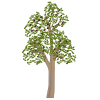
The olive tree is one of the oldest cultivated fruit trees in the world, prized for thousands of years for its fruit, oil, timber, and symbolic significance. A slow-growing evergreen, it is as much a landscape plant as a productive one — its sculptural, gnarled trunk and shimmering silver-green foliage making it a striking feature in any garden large enough to accommodate it.
Appearance
Young olive trees have smooth, silvery-grey bark that gradually becomes deeply furrowed, twisted, and hollowed with age, creating extraordinary textural character. The leaves are small, leathery, and lance-shaped — deep dusty green above and silvery-white beneath, fluttering distinctively in the breeze. Mature trees produce small, creamy-white flower clusters in spring, followed by fruit (drupes) that pass through green, straw-yellow, and deep purple or black as they ripen through autumn.
Fruit
Raw olives are intensely bitter due to the compound oleuropein and must be cured before eating. This can be done by water-curing, brine-curing, or lye-curing. Alternatively, ripe fruit can be cold-pressed to produce one of the world's most prized culinary oils.
Longevity and Resilience
Olive trees are extraordinarily long-lived. Established specimens can survive severe drought, nutrient-poor rocky soils, and intense heat. Their deep, spreading root systems allow them to access moisture and minerals unavailable to shallower-rooted plants. Once established, they require remarkably little intervention to thrive.
Container Growing
Olive trees adapt well to large containers, making them suitable for patios, terraces, and gardens in cooler climates where they can be moved under cover during harsh winters.
How To Grow
How to Grow Olive Trees
Olive trees thrive on minimal intervention once established. The key to success is providing the right conditions from the start — especially excellent drainage, full sun, and protection from waterlogging.
Choosing a Variety
Select a variety suited to your intended use:
- For table olives: Look for varieties bred for large, fleshy fruit.
- For olive oil: Varieties with high oil content are preferred.
- For ornamental use: Fruitless varieties avoid the mess of dropping fruit on paved areas.
For gardens in cooler climates, prioritise varieties with documented cold hardiness.
Site and Soil
- Sunlight: Full sun is essential — a minimum of 6–8 hours of direct sunlight daily.
- Drainage: Non-negotiable. Plant in free-draining, sandy or loamy soil. On heavy clay, build a raised bed or plant in a large container with drainage holes.
- Soil pH: Neutral to slightly alkaline (pH 7–8) is ideal.
- Spacing: Allow 5–8 metres between trees to ensure adequate airflow and canopy development.
Planting
Purchase a container-grown or balled-and-burlapped nursery tree rather than attempting to grow from seed, which takes many years. Dig a planting hole the same depth as the root ball but twice as wide. Do not add rich compost to the planting hole — olives prefer lean conditions. Backfill with the original soil, firm gently, and water thoroughly.
Watering
Newly planted trees need regular watering (every 2–3 days in dry weather) for the first growing season to help roots establish. Once established — typically after the second year — drastically reduce watering. Overwatering is a leading cause of olive tree decline.
Feeding
Olive trees are light feeders. A balanced slow-release fertiliser applied once in spring is usually sufficient. Avoid high-nitrogen feeds, which promote leafy growth at the expense of fruit.
Pruning
Prune in late spring once the risk of hard frost has passed. Remove crossing, dead, or inward-growing branches to maintain an open canopy that allows light and airflow to penetrate. Olives fruit on the previous year's wood, so avoid removing too much established growth.
Container Growing
In colder climates, grow in a large pot (at least 45–60 cm diameter) using a free-draining, loam-based compost mixed with grit. Move under cover — into a cool greenhouse or unheated polytunnel — before temperatures drop below -5°C. Bring back outside once hard frosts have passed in spring.
Harvesting
Harvesting Olives
Olive harvest typically takes place in autumn, though the exact timing depends on the stage of ripeness you require and the style of product you intend to make.
Understanding Ripeness
- Green olives (early harvest): Fruit is full-sized but still firm and bright green. Flavour is peppery and robust. Oil content is lower but the oil produced is intensely flavoured.
- Turning/veraison stage (mid harvest): Fruit shifts from green to straw-yellow or reddish-purple. This transitional stage is ideal for premium quality oil production.
- Black/ripe olives (late harvest): Fruit is fully darkened to deep purple or black, soft, with higher oil content and a milder, buttery flavour when cured.
Harvesting Methods
Hand picking (milking method): Slide your hand along branches, stripping fruit into a basket or bag hung around your neck. Gentle and suitable for small trees or premium table olive production, as it minimises bruising.
Raking: Use a hand-held olive rake (a wide-toothed comb) to drag through branches over laid-out nets or tarps. Faster than hand-picking for medium-sized trees.
Pole beating: Strike branches with a long pole to knock fruit onto spread nets below. A traditional method suited to larger trees.
Mechanical harvesting: For larger plantings, motorised vibrating rakes or trunk-shaker attachments dramatically speed up the process.
Post-Harvest Handling
Once harvested, act quickly:
- Sort immediately: Remove leaves, twigs, and any damaged or bird-pecked fruit.
- Store in shallow crates: Never heap olives deeply — this causes bruising, heating, and fermentation that ruins quality.
- Process promptly: For oil, pressing within 24 hours of harvest gives the finest results. For table olives, begin the curing process within 48 hours.
Curing Table Olives
Raw olives contain oleuropein, a bitter compound that makes them unpalatable straight from the tree. Remove bitterness using one of these methods:
- Water curing: Submerge in fresh water, changing daily for several weeks. The mildest method.
- Brine curing: Pack in saltwater brine for several months. Traditional and full-flavoured.
- Lye curing: Use a dilute food-grade lye solution for rapid de-bittering (within days). Common in commercial production.
After curing, olives can be stored in brine with herbs and aromatics and will keep for many months in a cool, dark place.
Common Problems
Common Olive Tree Problems
Pests
Olive Fruit Fly (Bactrocera oleae) is the most damaging pest of olive trees worldwide. The female lays eggs inside developing fruit, and the larvae tunnel through the flesh, causing premature fruit drop and making oil production impossible from affected fruit. Monitor using yellow sticky traps and pheromone lures. In small gardens, fine netting over the canopy during summer can provide effective physical protection.
Scale Insects (particularly olive scale and black scale) attach to stems and leaves, sucking sap and excreting honeydew that encourages sooty mould growth. Treat with horticultural oil sprays during the crawler stage or introduce natural predators such as parasitic wasps.
Spider Mites may become problematic during hot, dry spells, causing silvery mottling on leaves. Increasing ambient humidity and applying insecticidal soap can help manage infestations.
Diseases
Verticillium Wilt is a serious soilborne fungal disease that causes sudden wilting, yellowing, and branch dieback. There is no cure once established; remove and destroy affected branches and avoid planting in soil with a known history of the pathogen.
Olive Knot (Pseudomonas savastanoi) is a bacterial disease causing rough, rounded galls on branches and twigs. Prune out infected wood well below the visible gall using sterilised tools and avoid pruning during wet weather when the pathogen spreads most readily.
Peacock Spot (Spilocea oleagina) is a fungal leaf spot disease producing dark, circular spots with a yellow halo on the upper leaf surface, leading to premature leaf drop. Improve airflow through pruning and apply copper-based fungicide sprays in autumn and late winter.
Environmental Issues
Frost Damage: Although established trees tolerate temperatures down to around -10°C, young trees and new growth are vulnerable to late frosts. Protect young trees with fleece or bring container-grown specimens under cover during freezing spells.
Waterlogging: Poor drainage is arguably the most common cause of olive tree failure. Root rot sets in rapidly in waterlogged conditions. Always plant in free-draining soil or raised beds, and ensure containers have ample drainage holes.