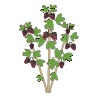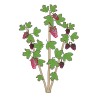
The loganberry is the "happy accident" of the berry world. If you've ever looked at a blackberry and a raspberry and thought, “Why choose?”—the loganberry is your answer.
Discovered in 1881 by judge and horticulturist James Harvey Logan, this berry is a spontaneous hybrid. It’s essentially a cross-pollination mishap that turned into a culinary win.
Appearance and Flavor At first glance, loganberries look like elongated, slightly oversized raspberries. However, they possess a distinct personality:
The Look: They are deep, dusky red (turning almost purple when fully ripe) and can reach up to an inch in length. Unlike raspberries, they stay attached to their core (receptacle) when picked, much like a blackberry.
The Taste: It’s a bold, sharp, and zesty experience. They are significantly more tart than a standard raspberry, with a complex "wild" undertone. Think of it as a raspberry with the volume turned up.
Culinary Uses Because of their high acidity and punchy flavor, loganberries are rarely eaten by the handful like strawberries. Instead, they shine when processed:
Preserves: Their high pectin content makes them elite candidates for jams and jellies.
Baking: They hold their shape well in crumbles, pies, and tarts.
Beverages: They are a popular base for syrups, wines, and the famous "Loganberry drink" popular in Western New York and Southern Ontario.
Fun Fact: The loganberry actually paved the way for other famous hybrids, like the Boysenberry and the Tayberry. It’s the grandparent of the "designer berry" movement.
How To Grow
Growing loganberries is a rewarding project, especially if you enjoy high yields with relatively low maintenance. They are hardier than many raspberries, but because they are "trailing" plants, they need a bit of structure to keep them from taking over your garden.
Here is how to get them from a tiny cane to a heavy harvest.
- Timing and Location When to Plant: Aim for late winter or early spring, as soon as the soil is workable but before the plant starts active growth.
Sunlight: Full sun is best for sugar production (at least 6–8 hours). They can handle partial shade, but your harvest will be smaller and more tart.
Soil: They prefer well-draining, slightly acidic soil. If you have heavy clay, plant them in a raised bed to avoid "wet feet," which causes root rot.
- Setting the Stage (The Trellis) Unlike upright raspberries, loganberries have long, flexible "canes" that can grow up to 6–10 feet. You must provide a support system.
Install a wire trellis or use a sturdy fence.
Space plants about 6–8 feet apart. It looks like a lot of empty space initially, but they fill it quickly!
- Planting and Care Dig: Make a hole twice as wide as the root ball.
Amend: Mix in plenty of well-rotted manure or compost.
Plant: Set the plant at the same depth it was in its pot. Firm the soil and water deeply.
Water: Keep the soil consistently moist, especially during the first year and while the fruit is setting.
Mulch: Apply a thick layer of wood chips or straw to retain moisture and keep weeds down.
- The "Two-Year" Pruning Rule Loganberries are floricanes, meaning they grow green canes the first year, and those same canes produce fruit the second year.
Year 1: Let the new green canes (primocanes) grow.
Year 2: These canes will flower and fruit. Once you finish harvesting the berries, cut those specific canes down to the ground. The Cycle: Always keep the new, fresh green canes for next year, and remove the woody ones that just finished fruiting.
Harvesting
Harvesting loganberries is a bit of a "detective game" because, unlike raspberries, they don't just pop off the vine when they turn red. Since they are delicate and have a short shelf life, timing is everything.
- Look for the "Wine" Colour Colour is your primary indicator, but it can be deceptive.
The "Red" Trap: When loganberries first turn bright red, they look delicious but are actually incredibly tart—enough to make your eyes water.
The Sweet Spot: Wait until they turn a deep, dark burgundy or purplish-red. At this stage, the sugars have developed, and the berry will be much softer to the touch.
- The "Gentle Twist" Technique Unlike a raspberry, which leaves its core (the "plug") behind on the plant, a loganberry stays attached to its core (like a blackberry).
Don't Pull: If you have to tug hard, it isn't ready.
The Twist: Hold the berry gently between your thumb and forefinger and give it a slight twist. A truly ripe loganberry will detach easily from the stem with almost no effort.
-
Best Time of Day Harvest in the early morning once the dew has evaporated but before the heat of the afternoon sun. Berries picked while cool are firmer, less likely to bruise, and will stay fresh significantly longer than those picked in the midday heat.
-
Post-Harvest Handling Loganberries are notorious for their short shelf life (often only 1–3 days).
Container: Use shallow containers or punnets. If you pile them too deep, the weight of the top berries will crush the ones at the bottom.
Don't Wash (Yet): Only wash them immediately before you plan to eat or cook them. Moisture is the fast track to mould.
Storage: Store them unwashed in a single layer in the fridge.
Pro Tip: To freeze them, place the berries in a single layer on a baking sheet (so they don't touch) and put them in the freezer for an hour. Once they are "flash frozen" and hard, you can pour them into a freezer bag without them sticking together in one giant clump.