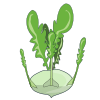
Loose leaf lettuce is the "free spirit" of the salad world. Unlike its cousins, Iceberg or Romaine, which grow in tight, disciplined heads, loose leaf varieties grow in open, ruffled bunches. This makes them incredibly easy to harvest—you can simply snip off a few leaves for a sandwich and let the rest of the plant keep growing.
Key Characteristics Texture: The leaves are generally tender, pliable, and delicate. They don't have the "crunch" of a rib-heavy lettuce, but they offer a velvety mouthfeel.
Flavour: Typically mild and slightly sweet. Because they lack a dense core, they rarely turn bitter as quickly as other varieties.
Appearance: They are the "models" of the vegetable drawer. You’ll find them in vibrant shades of lime green, deep burgundy, and bronze, often with frilled, curled, or "oak-shaped" edges.
Best Ways to Use It Because loose leaf lettuce is so delicate, it doesn't hold up well to heavy, creamy dressings (which can make the leaves wilt instantly).
The Perfect Pairing: Stick to light vinaigrettes, citrus-based dressings, or a simple drizzle of olive oil and sea salt.
The "Final Touch": Use it to add height and colour to a plate, or as a soft bed for grilled fish or chicken.
Kitchen Tip: Wash it just before you use it. Because the leaves are so thin, they lose their perkiness quickly once wet.
Pro Tip: If your loose leaf lettuce looks a bit sad and wilted in the fridge, soak the leaves in a bowl of ice water for 10 minutes. They’ll "drink" the water and crisp right back up.
How To Grow
Growing loose leaf lettuce is arguably the best "bang for your buck" in gardening. It’s fast, relatively unfussy, and since it’s a "cut-and-come-again" crop, you can harvest from the same plant for weeks.
Here is how to get your salad bar started.
- Timing and Location Lettuce is a cool-weather crop. It thrives when the air is crisp and will "bolt" (turn bitter and grow a tall seed stalk) once the summer heat hits.
Temperature: Aim for soil temperatures between 7°C and 21°C.
Sun: It loves full sun in the spring or fall. However, if you're growing in a warmer climate, partial shade (especially in the afternoon) will prevent the leaves from wilting.
Soil: Use well-draining soil rich in organic matter. Lettuce has shallow roots, so it doesn't need a deep pot—15cm depth is plenty.
- Planting the Seeds You don't need to be a master surgeon here; lettuce seeds are tiny and hardy.
Sow: Scatter seeds thinly over the soil surface or plant them in rows about 30cm apart.
Depth: Cover them very lightly with about 0.5cm of soil. They actually need a little bit of light to trigger germination.
Water: Mist the soil gently. Don't use a heavy stream, or you’ll wash the tiny seeds away.
- Care and Maintenance Thinning: Once seedlings are about 5cm tall, thin them out so plants are 10-15cm apart. (Bonus: You can eat the tiny thinning)
Hydration: Keep the soil consistently moist. Lettuce is mostly water; if the soil dries out, the leaves will turn bitter and tough.
Mulch: A thin layer of straw or compost helps keep the roots cool and the leaves clean from dirt splash-back.
Harvesting
Harvesting loose leaf lettuce is incredibly satisfying because it’s one of the few vegetables that gives you an immediate "reset" button. Unlike a head of cabbage or a carrot, you don't have to kill the plant to eat it.
Here is the best way to harvest for maximum yield and freshness.
- The "Cut-and-Come-Again" Method This is the gold standard for loose leaf varieties. By harvesting only what you need, the plant stays in a juvenile state and continues to produce new foliage.
When to start: Begin when the leaves are 8–12cm (3–5 inches) tall.
Where to cut: Use clean kitchen shears or garden snips to cut the outer leaves first.
The Golden Rule: Always leave the "crown" (the very centre point where tiny new leaves are emerging) untouched. As long as the centre is intact, the plant will keep pumping out salad.
Height: Cut about 2–3cm (1 inch) above the soil line to avoid damaging the growing point.
- The "Thinning" Harvest (Early Stage) If you planted your seeds too close together, you’ll notice a crowded carpet of green.
Instead of cutting, pull entire small plants out of the ground to create space (about 10cm) between the remaining ones.
These are "baby greens"—the most tender and expensive version of lettuce you'd find at a grocery store. Eat them roots and all (after a good wash!).
- Timing is Everything The when matters just as much as the how:
The Morning Window: Harvest in the early morning (before 10:00 AM) while the dew is still on the leaves. Overnight, the plant rehydrates; morning leaves are crisp and sweet, whereas evening leaves can be limp and bitter from the day's sun.
The "Bolt" Watch: If you see the centre of the plant start to stretch upward into a tall, thick stalk, it is "bolting." This means the plant is trying to make seeds. Harvest the entire plant immediately, as the leaves will turn very bitter within 24–48 hours of bolting.
- Post-Harvest Handling Loose leaf lettuce has a high surface area and loses moisture fast.
The Cold Plunge: Immediately dunk your harvested leaves in a bowl of very cold water. This removes field heat and dirt.
Dry Thoroughly: Use a salad spinner or pat them dry with a clean towel. Water left on the leaves in the fridge leads to "slime."
Storage: Store in a breathable bag or a container lined with a paper towel. It will stay fresh for about 7–10 days