Often hailed as the "king of greens," kale (Brassica oleracea) is a hearty, cruciferous vegetable belonging to the cabbage family. Once relegated to the side lines as a mere garnish for salad bars, it has exploded in popularity over the last decade due to its exceptional nutrient density and versatility in the kitchen.
Varieties and Appearance Not all kale is created equal. Depending on the variety, the leaves can range from dusty green to deep purple, and the textures vary significantly:
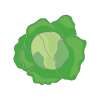
Curly Kale: The most common variety. It features bright green, frilly leaves and a fibrous stalk. It has a pungent, peppery flavour that mellows when cooked.
Lacinato (Dino) Kale: Recognizable by its dark, blue-green colour and bumpy, "alligator skin" texture. It is slightly sweeter and more delicate than curly kale.
Red Russian Kale: This variety has flat, fringed leaves that look a bit like oak leaves, with distinct purple stems. it is known for being the sweetest and most tender of the bunch.
Nutritional Powerhouse Kale is famous for its "superfood" status because it packs a massive amount of vitamins and minerals into very few calories. It is particularly rich in:
Vitamin K: Essential for blood clotting and bone health.
Vitamin C: An antioxidant that supports immune function and skin health (kale actually contains more Vitamin C than an orange).
Vitamin A: Important for vision and cellular growth.
Fibre: Aids in digestion and keeps you feeling full.
Culinary Uses Because kale is sturdier than spinach or lettuce, it holds up well to high heat and acidic dressings.
Massaged Salads: To eat it raw, it’s often best to "massage" the leaves with olive oil or lemon juice. This breaks down the tough cellulose fibres, making it softer and less bitter.
Smoothies: A handful of kale adds a massive nutrient boost to fruit smoothies without over-powering the taste if balanced with sweetness.
Kale Chips: When baked at a low temperature with a bit of salt and oil, the leaves become incredibly crisp and light.
Soups and Stews: Unlike spinach, which wilts into nothing, kale maintains some "bite" even after simmering in a broth.
Pro Tip: Always remove the centre rib (the woody stem) before eating. While edible, it is often too tough and bitter for most dishes unless finely chopped and sautéed.
How To Grow
Growing kale is surprisingly rewarding because it’s one of the hardiest plants in the garden. It actually thrives in the "shoulder seasons" (spring and fall) and is one of the few vegetables that gets sweeter after a light frost.
Here is your step-by-step guide to a successful kale harvest.
- Timing and Temperature Kale is a cool-season crop. While it can tolerate some heat, high temperatures often make the leaves tough and bitter.
Spring Crop: Plant seeds outdoors 4–6 weeks before the last frost.
Fall Crop: Plant seeds 6–8 weeks before the first expected fall frost.
Optimal Temperature: It grows best between 15°C and 21°C (60°F–70°F).
- Soil Preparation Kale isn't too picky, but it loves "rich" soil.
Sunlight: Full sun is best, but kale is one of the few veggies that handles partial shade (4 hours of sun) quite well.
Soil Type: Aim for well-draining soil with plenty of organic matter (compost).
pH Level: Ideally between 6.0 and 7.5. If your soil is too acidic, the plant may be prone to clubroot disease.
- Maintenance and Care Watering: Keep the soil consistently moist but not soggy. Mulching around the base of the plants helps retain moisture and keeps the roots cool.
Fertilizing: If your soil is rich in compost, you're likely set. If the growth seems stunted, a nitrogen-rich organic fertilizer can give them a boost.
Pest Control: Keep an eye out for Cabbage Loopers (little green caterpillars). You can protect your plants with "row covers" (thin mesh) to prevent butterflies from laying eggs on the leaves.
- Harvesting The best part! You can start harvesting kale as soon as the leaves are about the size of your hand.
Bottom-Up: Always harvest the lowest, outermost leaves first.
Protect the Crown: Avoid picking the very centre (the "terminal bud"). As long as the centre stays intact, the plant will keep producing new leaves from the middle.
The Frost Factor: If you're growing in the fall, wait for the first frost before a big harvest. The cold triggers the plant to convert starches into sugars, making the leaves delicious.
Harvesting
Harvesting kale is a bit like a "haircut" for your plant—if you do it correctly, the plant will actually grow faster and produce more leaves. Because kale grows from the centre out, you can enjoy a continuous harvest for months.
Here is how to get the most out of your crop:
- The "Bottom-Up" Rule The most important rule for kale is to start at the bottom.
Identify the mature leaves: These are the largest, oldest leaves at the base of the plant.
The Crown: Never harvest the "terminal bud" (the tiny, new leaves at the very top/centre). This is the growth point. If you cut this, the plant will stop growing upward.
- Timing the Harvest Baby Greens: You can start snipping tiny leaves when the plant is about 10 cm (4 inches) tall. These are tender and great for salads.
Mature Leaves: Wait until the plant is about the size of a dinner plate or has at least 10–12 leaves.
The "Sweet Spot": For the best flavour, harvest in the early morning when the leaves are crisp and hydrated.
- The Technique You don't need fancy tools, but a clean pair of garden snips helps.
Snap or Snip: Grab a mature leaf near the base of the stem. Pull downward and outward until it "snaps" off. If the stem is stubborn, use scissors to avoid tugging on the roots.
Quantity: A good rule of thumb is to never take more than 1/3 of the plant’s leaves at once. This ensures the plant still has enough "solar panels" to photosynthesize and regrow.