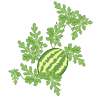
The honeydew melon is the understated, sophisticated cousin of the cantaloupe. Known for its sleek, pale-green skin and remarkably refreshing flavour, it is a staple of fruit salads and breakfast spreads—often acting as the "cool down" element in a bold meal.
The Essentials Appearance: Unlike its netted relatives, the honeydew has a smooth, waxy rind that transitions from a pale green to a creamy white or light yellow as it ripens.
The Interior: Inside, you’ll find succulent, light-green flesh centred around a small cluster of seeds.
Flavour Profile: It offers a clean, mild sweetness with subtle floral notes. It lacks the musky punch of a cantaloupe, making it a favourite for those who prefer a more delicate palate.
Nutritional Highlights Honeydew isn't just sugar and water; it’s a powerhouse of hydration.
Hydration: Composed of about 90% water, it’s an edible electrolyte drink.
Vitamins: Rich in Vitamin C and Vitamin B6, supporting immune health and brain function.
Potassium: Helps maintain healthy blood pressure levels, much like a banana but with a lighter calorie count.
How to Pick a Winner Finding a ripe honeydew is an art form. Since they don't have a strong scent through their thick skin, look for these signs:
The Feel: The rind should feel slightly tacky or "velvety," not slick and hard like a bowling ball.
The Sound: Give it a gentle shake. If you hear the seeds rattling inside, it’s a sign the melon is ripe and the flesh has softened.
The Weight: It should feel heavy for its size, indicating it’s full of juice.
Pro-Tip: If you have a melon that’s a bit underripe, pair it with something salty like prosciutto or a squeeze of lime juice. The salt or acid will pull out the hidden sugars and elevate the flavour instantly.
How To Grow
Growing honeydew melons is a rewarding "long game." They require a bit of patience and a lot of sunshine, but the payoff—a melon far sweeter than anything you’ll find at the grocery store—is worth the wait.
- Timing and Climate Honeydew melons are heat-lovers. They have a long growing season, typically needing 80 to 100 days of frost-free weather to reach maturity.
Soil Temp: Do not plant until the soil is consistently at least 18°C to 21°C.
Sunlight: Full sun is non-negotiable. They need at least 8 hours of direct light daily.
- Soil Preparation These plants are "heavy feeders," meaning they need a lot of nutrients to produce those sugary fruits.
The Mix: Use well-draining soil rich in organic matter. Mix in a healthy amount of compost or aged manure before planting.
pH Level: They prefer slightly acidic to neutral soil, ideally between 6.0 and 6.8.
- Planting Techniques If you live in a cooler climate, start seeds indoors 3–4 weeks before the last frost using peat pots (melon roots are sensitive to being moved). Otherwise, sow directly into the garden.
Mounds: Create small hills (mounds) about 3 feet apart.
Depth: Plant 3 seeds per mound at a depth of about 1 inch (2.5 cm).
Thinning: Once they are a few inches tall, snip the weakest two, leaving the strongest single plant per mound.
- Care and Maintenance Watering: Keep the soil consistently moist but not soggy. Use drip irrigation or water at the base of the plant; wetting the leaves can lead to powdery mildew.
Mulching: Apply straw or plastic mulch to keep the soil warm, retain moisture, and keep the developing melons off the bare dirt.
Pollination: Melons produce separate male and female flowers on the same plant. They rely on bees to do the heavy lifting, so avoid using heavy pesticides that might scare off your local pollinators.
Harvesting
Unlike cantaloupe, which practically jumps off the vine when it's ready (a process called "slipping"), the honeydew is a bit more clingy. If you pull it too early, it won't ripen further on your counter; if you wait too long, it becomes mushy.
Harvesting honeydew is all about observing subtle shifts in colour, texture, and sound.
The Checklist for Ripeness Check your melons daily once they reach their full size. Look for these four specific indicators:
-
The "Creamy Shift" (Colour) This is the most reliable visual cue. A young, growing honeydew is a pale, stark green. As it matures, the rind will transition to a creamy white or a buttery yellowish-tan. If the melon still looks "dusty" or distinctly green, leave it on the vine.
-
The Feel (Waxy vs. Fuzzy) Run your hand over the rind.
Unripe: The skin often feels slightly hairy or fuzzy.
Ripe: The tiny hairs disappear, and the skin feels smooth and waxy. In some varieties, the skin might even feel slightly tacky or "sticky" to the touch—this is a great sign that the sugars have developed.
- The "Spring" Test Gently press your thumb on the blossom end (the end opposite where the stem is attached).
If it feels hard like a rock, it’s not ready.
If it has a slight give or springiness, it’s prime for picking.
- The Smell and Sound Scent: While not as fragrant as other melons, a ripe honeydew will have a faint, delicate floral aroma at the blossom end.
The Rattle: Give the melon a very gentle shake while it's still attached to the vine. If you hear the seeds rattling inside, the flesh has softened enough to release them, meaning it's fully mature.
How to Properly Cut the Vine Honeydews do not "slip" naturally. If you try to pull it off and the stem resists, do not force it, or you risk damaging the main vine.
Use Tools: Use a clean pair of garden shears or a sharp knife.
The Stem: Cut the stem about 1 inch (2.5 cm) away from the fruit. Leaving a small "handle" helps prevent rot from entering the top of the melon during storage.
Handle with Care: Even though they look tough, melons bruise easily. Place them gently in a basket rather than tossing them.
Post-Harvest Storage Room Temperature: If it's just under-ripe, keep it at room temperature for 2–3 days to soften the texture (though it won't get significantly sweeter).
Refrigeration: Once fully ripe, a whole honeydew will keep in the fridge for about 5 to 7 days.
Fun Fact: A honeydew's sugar content is measured in "Brix." A high-quality homegrown melon usually hits between 10% and 15% Brix, making it significantly sweeter than the 8% typically found in stores