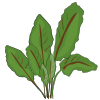
Common sorrel (Rumex acetosa)—often simply called "sorrel" or "garden sorrel"—is a perennial herb that sits in a unique culinary spot: it looks like a leafy green but tastes like a squeeze of fresh lemon.
Here is a breakdown of what makes this plant a favourite for gardeners and chefs alike.
Appearance and Growth Leaves: The plant features smooth, arrow-shaped (sagittate) leaves that are a vibrant, bright green. They grow in a basal rosette at the ground level.
Flowers: In late spring and summer, it sends up tall, reddish-green flower spikes. While striking, these are usually pinched off by gardeners to keep the leaves tender.
Habit: It is a hardy perennial, meaning it comes back year after year. It’s often one of the first greens to pop up in the spring and one of the last to fade in the fall.
The Flavour Profile The defining characteristic of sorrel is its sharp, acidic, and citrusy punch. This is due to the presence of oxalic acid, which provides a tartness similar to lemon zest or green apples.
Note: Because of the oxalic acid, it’s best enjoyed in moderation, especially for those prone to kidney stones.
Culinary Uses Sorrel is incredibly versatile but undergoes a "magic trick" when cooked: it turns from bright green to an unappetizing olive drab in seconds. Don't let the colour fool you—the flavour remains excellent.
Why Grow It? If you have a garden, sorrel is a "set it and forget it" plant. It thrives in most soils, handles partial shade well, and is rarely bothered by pests. It’s essentially a gourmet vegetable that grows with the tenacity of a weed.
How To Grow
Growing common sorrel is a dream for "lazy" gardeners. It is a rugged, cold-hardy perennial that behaves more like a persistent weed than a delicate vegetable. Once established, it will provide you with zesty greens for years with very little intervention.
Here is how to get started:
- Timing and Placement When to Plant: Sow seeds directly in the garden 2 to 3 weeks before the last frost in spring. You can also start them indoors 6 weeks early, but they handle direct sowing very well.
Sunlight: It prefers full sun (at least 6 hours), but in hotter climates, it actually appreciates partial shade to keep the leaves from becoming too bitter too quickly.
Soil: Sorrel isn't picky, but it loves well-draining soil with a slightly acidic pH.
- Sowing and Spacing Depth: Plant seeds about 1/4 inch (0.5 cm) deep.
Spacing: Thin the seedlings so they are 12 to 15 inches apart. If you give them room, they will grow into lush, bushy clumps.
Containers: Sorrel does great in pots! Use a container at least 6–8 inches deep to accommodate its taproot.
- Ongoing Care Watering: Keep the soil consistently moist. Sorrel likes a drink, and if it gets too dry, it may decide to "bolt" (go to seed) prematurely.
Manage the Flowers: As soon as you see a flower stalk starting to rise, cut it off. Once the plant flowers, the leaves become tough and lose their bright, lemony flavour.
Division: Every 3 to 4 years, the clump might get crowded and "woody." In early spring, dig it up, split the root ball in half with a spade, and replant the sections to rejuvenate the patch.
- Harvesting Pick Early: You can start harvesting once the plant is about 4–6 inches tall (usually 60 days from seed).
Selectivity: Always pick the outer leaves first. Leave the tiny center leaves alone so the plant can keep regenerating.
The "Cut and Come Again" Method: You can harvest sorrel throughout the entire growing season. The more you harvest, the more new, tender leaves it will produce.
A Quick Pro-Tip If you live in a place with a true winter, the plant will die back to the ground when it freezes. Don't worry—it’s just sleeping. It will be one of the very first green things to pop out of the dirt the following spring
Harvesting
Harvesting sorrel is incredibly straightforward, but there is a "sweet spot" for timing if you want the best flavor. Since it’s a "cut-and-come-again" crop, the more you harvest, the more the plant is encouraged to produce fresh, tender growth.
Here is the best way to do it:
- Timing the Harvest The "Baby" Stage: You can start picking leaves when they are about 3 to 4 inches long. These are the most tender and are perfect for eating raw in salads.
The "Mature" Stage: For soups and sauces, wait until the leaves are 6 inches long. They will have a stronger, more acidic punch that holds up better to cooking.
The Season: In most climates, you can harvest from early spring all the way to the first hard frost.
- The Technique Pick from the Outside: Always harvest the outermost leaves first. This allows the small, young leaves in the center (the "crown") to continue growing.
Cut, Don't Pull: Use garden snips or kitchen shears to cut the stems about an inch above the soil. Pulling the leaves can accidentally damage the shallow root system or tug the whole plant out of the ground.
Frequency: Harvest frequently! If you let the leaves get too large (over 8–10 inches), they become tough, fibrous, and overly bitter.
- Post-Harvest Care Managing the "Bolt": If you see a tall, thick stalk growing from the center with tiny reddish flowers, cut it off immediately at the base. If the plant is allowed to flower, it stops putting energy into tasty leaves and they will turn unpleasantly bitter.
The Mid-Summer Reset: If your sorrel looks a bit haggard or "leggy" in the heat of July, you can perform a hard prune. Cut the entire plant down to about 2 inches above the ground. Water it well, and within a couple of weeks, you’ll have a flush of brand-new, tender leaves.
- Storage Tips Sorrel is notorious for wilting quickly once picked.
Short-term: Wrap unwashed leaves in a damp paper towel, place them in a plastic bag, and keep them in the crisper drawer of your fridge. They’ll last about 3 to 5 days.
Long-term: Because of its high water content, sorrel doesn't dry well. Instead, puree the leaves with a little water or olive oil and freeze the mixture in ice cube trays. These "sorrel cubes" are perfect for dropping into hot soups or sauces later in the winter